
How to Find and Patch a Leak in an Inflating Pad
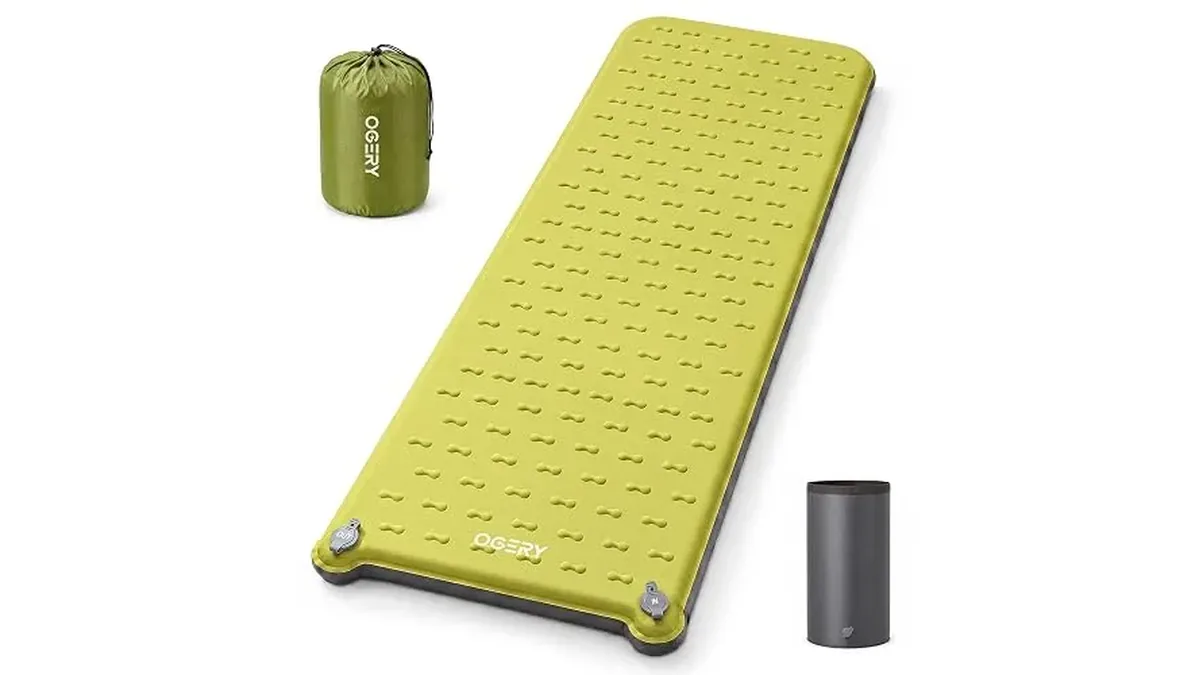
A pad that goes soft overnight usually has a valve that was not fully closed or a small puncture in the coated shell. Start with the valve, then inflate the pad and hunt along the seams and face for escaping air. The Foam Camping Mattress ships with a quick-repair kit in the bag, which is the patch method to use once you have found the hole. This is a care walkthrough from published features.
Know which pad you are holding
The Foam Camping Mattress is a foam-and-air pad, 76.7 × 26.7 × 1.6 in (1950 × 680 × 40 mm), with a 20D ripstop nylon shell, a 0.8 mm airtight TPU coating, a pump sack, and an airtight valve. The bag also holds a storage sack, packing straps, and that quick-repair kit. The foam core is there to resist bottoming out; the coating is what has to stay airtight.
The Ultralight 6" Inflating Pad is a thicker air pad: 79 × 27.5 × 6 in (2007 × 699 × 152 mm) inflated, about 2.4 lb (1.09 kg), 50D polyester with a waterproof TPU coating, a built-in foot pump, and dual-layer air valves. OGERY rates it at R-value 4.5. There is no foam core to hide a leak, so a hole in the shell or a valve that is not seated will show up as a pad that sags.
Inflation steps live in how to inflate and deflate an OGERY sleeping pad. The sleeping pad comparison is the side-by-side for thickness and R-value.
Rule out the valve first
Most “leaks” are open or half-closed valves.
- Inflate the pad the way that model is meant to be filled: pump sack on the foam mattress, built-in foot pump on the 6 in air pad. Do not exhale into the foam mattress if you can use the sack; OGERY notes that the sack keeps breath moisture out of the core.
- Close the valve fully and feel the cap or stem so it is seated, not just resting.
- Leave the pad on a clean floor for a few minutes and press near the valve with a flat hand. If you feel or hear air only at the valve, open it, reseat it, and close it again before you look for a hole.
- On the Ultralight pad, OGERY calls out dual-layer valves and notes that they need to be closed properly to hold air overnight. Check both if the pad has more than one.
If the valve now holds and the pad stays firm, you are done.
Find the hole without guessing
Work on a clean, dry surface. OGERY tells you to clear stones and sticks before you lay the Ultralight pad down, even inside a tent, and that is the right first step on these coated shells.
Inflate the pad until it is supportive, then:
- Listen close to the face, the sides, and the seams. A steady hiss is easier to hear in a quiet room than on a windy campsite.
- Hold your hand or your cheek just above the surface and move slowly. Escaping air feels cooler than still air.
- Flex the pad gently at the corners and at the valve junction, which is where a crease or a bit of grit can open a pin hole.
Mark the spot lightly once you find it, then let that area dry if it is damp. A patch on a wet coating will not grab.
Use the kit the way it is packed
On the Foam Camping Mattress, the quick-repair kit is part of the bag contents. Follow the instructions that come with that kit for surface prep, patch size, and cure time. Those details belong to the kit, and they can differ from a tube you bought separately.
A few habits still apply:
- Patch on a clean, dry, fully deflated or lightly firm area, as the kit directs. Do not stretch a hole wider while you work.
- Cover the hole with a margin of coated fabric, not a tiny dot that sits only on the puncture.
- Let the repair sit for the time the kit lists before you inflate hard or roll the pad back into the sack.
- After it holds, inflate again and repeat the listen-and-feel check.
If your pad is the Ultralight 6 in model and no kit was in the box you have, use a repair kit made for polyurethane-coated inflatable pads and follow that kit’s card, or contact the seller if the pad is still under whatever coverage you were sold.
Keep the next hole from starting
Clear the ground before the pad goes down. The foam mattress shell is described as resisting abrasion, punctures, and water, and the Ultralight uses a waterproof TPU coating, but neither coating is armor against a sharp tent stake under a 6 in air chamber.
At pack-up, open the valve and roll toward it to push the air out, then pack the pad dry. At home, store foam and self-inflating pads loosely rolled or flat, valve open, away from direct sun and heat, which is the storage note OGERY already gives.
When to stop patching
A torn seam, a ripped valve base, or a cluster of holes along a crease is past a single patch. Compare a fresh foam mattress if you want the included kit and a slimmer roll, or the Ultralight pad if height and the foot pump matter more than foam support.
Bottom line
Close the valve before you assume the shell is split. If air still leaves, inflate the pad on a clean surface, find the stream by sound and feel, and repair the Foam Camping Mattress with the quick-repair kit that ships in the bag, following that kit’s own steps. Keep stones out from under the pad and store it dry with the valve open at home.